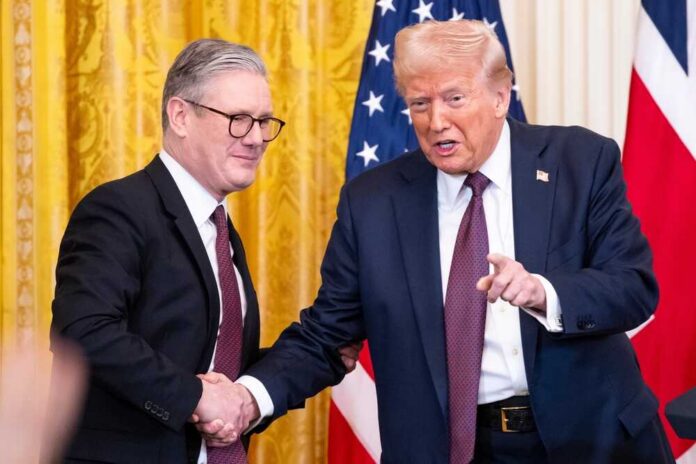
President Trump just put the UK on notice: if allies hesitate when American forces are in motion, they shouldn’t expect applause—or influence—after the smoke clears.
Quick Take
- Trump blasted UK Prime Minister Keir Starmer for initially blocking U.S. use of British bases during strikes on Iran, then signaling support after the operation was underway.
- UK policy shifted after Iranian retaliation, including a reported drone strike hitting the British base at Akrotiri in Cyprus, pushing London toward “defensive” cooperation.
- Starmer defended the decision in Parliament as lawful and in Britain’s national interest, reflecting deep UK sensitivity after the Iraq War.
- Reports say the UK considered preparing the HMS Prince of Wales carrier for possible deployment, but no final deployment decision was confirmed.
Trump’s Public Rebuke Signals a Harder Standard for Allies
President Donald Trump used Truth Social and follow-up comments to criticize Prime Minister Keir Starmer for declining to let U.S. forces use British bases at the start of strikes on Iran, then appearing to come around after the operation had already advanced. Trump’s message was simple: late participation is not leadership. The dispute matters because British basing and logistics can be central to Middle East operations, especially when time-sensitive strike windows open.
Trump’s complaint also carried a broader diplomatic warning. Reports describe him calling Starmer “very disappointing” and contrasting the current UK posture with a more resolute wartime Britain. While the phrase “we’ve already won” reflects Trump’s framing, other reporting indicates the conflict and risks were still evolving. The immediate takeaway is less about rhetoric and more about leverage: Trump is openly tying access, respect, and future cooperation to timely allied support.
Starmer’s “Lawful Basis” Defense Reflects Post-Iraq Political Reality
Prime Minister Starmer’s position was grounded in legality and domestic politics. Multiple reports describe Starmer resisting offensive use of UK bases at the outset, arguing Britain must ensure a lawful basis and act in the national interest. That caution mirrors the political scars of the 2003 Iraq invasion, where UK involvement under Tony Blair became deeply unpopular. For UK leaders, the lesson is clear: rushing into a U.S.-led Middle East war can trigger long-term political fallout at home.
Starmer later told Parliament his decisions were “right for the country” and insisted the U.S.-UK relationship remains intact. Reporting also says no direct Trump-Starmer conversation occurred after the strikes began, which helps explain why the dispute spilled into public view rather than being handled quietly. When two leaders are not aligned privately, messaging becomes policy. For Americans who expect allied reliability, the episode raises a practical question: how dependable is “yes” if it only arrives after retaliation begins?
Iran’s Retaliation Pushed the UK Toward Defensive Cooperation
Events on the ground appear to have forced London’s hand. Reports describe Iran firing missiles over the weekend and a drone strike hitting the British base at Akrotiri in Cyprus. In that environment, the UK reportedly allowed U.S. use of bases for “defensive strikes” targeting Iranian missiles and storage sites. The distinction—offensive versus defensive—matters politically in London, but operationally it still means U.S. forces were seeking and then receiving support once British personnel and infrastructure were under threat.
UK deployments described in reporting included naval and air defense activity aimed at protecting assets and intercepting threats, alongside broader regional defensive actions. That sequence—initial reluctance, enemy retaliation, then defensive alignment—explains why Trump framed the shift as too little, too late. It also underscores a sobering reality for voters who value national sovereignty and clear constitutional lines: when allied governments hesitate, U.S. planners may be forced to act with fewer constraints—but also fewer partners sharing risk.
Carrier Talk, Alliance Optics, and What Comes Next
Another flashpoint was Britain’s apparent consideration of moving high-end naval power closer to the conflict. Reports say the UK Ministry of Defence announced preparation of the HMS Prince of Wales aircraft carrier for possible Middle East deployment, while emphasizing that no final decision had been confirmed. Trump dismissed the late carrier idea as unnecessary, arguing the moment for meaningful help had passed. From a conservative perspective, the dispute highlights a familiar principle: alliances only work when commitments are clear, timely, and reciprocal.
Trump Lets Britain's Keir Starmer Have It: 'We Don't Need People That Join Wars After We've Already Won!'https://t.co/dwXSGA5Z8g
— RedState (@RedState) March 8, 2026
What remains uncertain is how durable the damage will be. Some reporting suggests the short-term effect could be less coordination and a chill in trust, with longer-term implications for how Washington prioritizes partners. Starmer has warned Britons to brace for a “long war,” which undercuts any assumption that the crisis is settled. With stakes involving bases, regional deterrence, and future operations, the next test will be whether London’s cooperation becomes predictable—or continues to arrive only after America has already acted.
Sources:
War with Iran strains U.S.-U.K. relationship as Starmer, Trump disagree
Trump says US-UK relationship ‘not what it used to be’