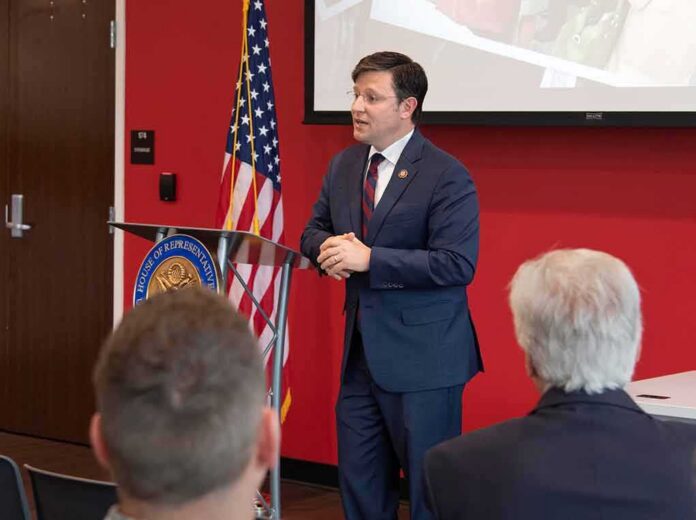
House Speaker Mike Johnson says the polls are wrong and is steering Republicans to run on border security, energy, public safety, and the economy to keep the House majority.
Story Highlights
- Johnson rejects forecasts that favor Democrats and says pollsters are missing Republican voters.
- Johnson centers the GOP message on border security, energy, crime, and the economy.
- Johnson says turnout will decide close House races and urges an all-out ground game.
- Reports show Republicans are fighting headwinds and seeking more resources in tough districts.
Johnson’s Case: Polling Is Missing Key Republican Voters
House Speaker Mike Johnson argued in recent media appearances that public polls showing Democrats favored to win the House are “off” because they rely on faulty analysis. Johnson said pollsters are undersampling Republicans while oversampling Democrats, creating what he called a partisan nonresponse bias. He pointed to what he sees on the trail in swing districts as evidence of stronger Republican energy than the toplines suggest. Several outlets have quoted Johnson’s critique as categorical and confident.
Johnson also noted he is spending time in the very districts that will decide control. He said he draws his view from travel, local events, and talks with candidates and organizers. He described a shift happening on the ground that national snapshots miss. He added that he expects a close outcome and is not promising a wave. He said the goal is a “working majority,” not a giant one, as Republicans defend vulnerable seats across the map.
The Message: Border, Energy, Safety, and the Economy
Johnson said Republicans will run on a concrete record and four core issues. He listed border security, reliable energy, public safety, and the economy as the pillars. He tied each to everyday costs and community security. He framed border policy as a sovereignty and safety issue. He linked energy costs to household budgets and small business margins. He stressed law and order for families and neighborhoods and said growth must come from work, not more federal debt.
Johnson argued that a clear issue focus matters more than cable narratives. He said voters want policies that control the border, lower energy bills, back police, and tame inflation. He contrasted those with what he called Democratic priorities that raise costs and weaken safety. He urged volunteers to talk to neighbors, highlight specific votes, and point to bills passed by the House. He said discipline and unity on these themes will carry close races at the finish.
Turnout Math and the Road to a Narrow Majority
Johnson said turnout is the key in a fight this tight. He told crowds that getting reliable voters to the polls will decide control of the House. He urged early voting where available, ballot tracking, and ride-to-the-polls pushes. He said personal contact and local trust can beat a bad headline. He also warned that midterms often punish the president’s party, so the team must “defy history” with heavy engagement in target districts.
Historical data back his caution about midterms. Over many cycles, the president’s party has usually lost House seats during the midterms. A review of past elections shows average losses in the dozens for that party. That pattern does not fix the outcome in any single year, but it sets a steep baseline. Johnson’s strategy accepts the headwind while aiming to hold just enough seats to govern, even if many races stay within a few points.
Inside the Fight: Resources, Risks, and Credibility Tests
Coverage shows Republicans working to shore up resources ahead of Election Day. Reports said Johnson asked President Trump for more help to protect incumbents and defend tough seats. Some party operations have weighed shifting money to races that are still within reach. That triage reflects a close battlefield, not a runaway map. Johnson’s public tone remains confident, even as the party hunts for cash and manpower to finish strong.
Johnson’s polling critique faces a clear test: final results. Forecasts cited by media have put Democrats in a strong position. Johnson counters that shy or busy Republican voters are not taking surveys at the same rate. If his ground reports match the vote, he will look prescient. If the polls land close, critics will say his claim was too broad. For now, he is betting on issue focus and turnout mechanics to save a narrow, working House majority.
Sources:
youtube.com, yahoo.com, cnn.com, silive.com, cnbc.com, ground.news, usatoday.com