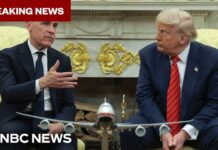
President Trump again threatened major strikes against Iran, then moved to pause them for a rapid deal.
Quick Take
- Trump warned Iran to reopen the Strait of Hormuz or face more U.S. attacks.
- His warnings included strikes on bridges, power plants, and other infrastructure.
- Reporting said the military was preparing for possible new action.
- Trump later said he had canceled or held off on strikes if a deal moved quickly.
Trump Raises the Stakes on Iran Again
President Trump has once again used public threats to push Tehran toward a deal. Reuters reported that he said the United States would hold off on fresh attacks only if Iran moved fast on an agreement tied to the Strait of Hormuz. Other coverage said he warned of widespread destruction if Iran did not comply, including strikes on energy and transport targets.
That threat posture was unusually direct. Reuters reported that Trump said he had ordered the military to be ready for strikes if Iran acted against the United States, and he used the phrase “locked and loaded” in describing that posture. BBC reporting also quoted him saying Iran could be taken out “in one night,” while other reports described him promising to hit Iran “very hard” if talks failed.
Military Pressure Sat Behind the Public Threats
The reporting did not stop at rhetoric. Reuters said Trump had discussed broadening targets to energy plants, bridges, Kharg Island, and Pickaxe Mountain, while also ramping up air strikes. CBS News reporting said the United States military was preparing for possible new strikes as soon as the weekend, with planning that could include Iranian power plants, refineries, and other energy sites.
That matters because it shows the threats were tied to real military pressure, not empty words. Reuters also reported that the United States carried out fresh strikes during the wider conflict and that Trump said more assaults could follow if a peace deal did not hold. Still, the record shown here does not include a public strike order or detailed war plan, so the line between coercion and final approval remains partly hidden from view.
Trump Then Shifted Toward Delay and Deal-Making
Here’s how Trump has zig zagged with on-again, off-again strikes throughout the Iran war https://t.co/olxhgyzjDp
— Arnaud Mercier – #Entrepreneur #Versailles (@arnaudmercier) August 3, 2026
Within days, Trump shifted again. The New York Times reported that he canceled threatened strikes on Iran, pending a rapid deal that would reopen the Strait of Hormuz and address Iran’s nuclear program. BBC and PBS reporting likewise described him pulling back strikes or tying them to a fast-moving diplomatic path, which fits a familiar pattern of hard threats followed by a pause.
That back-and-forth leaves a clear impression of coercive diplomacy. Trump’s public message has been consistent in one sense: he keeps using the threat of force to demand compliance from Tehran. Reuters and Associated Press reporting show that this was not a one-day outburst, but a repeated cycle of deadlines, military warnings, and then delayed action. For conservatives who want strength without another endless war, the question is whether the pressure works or only drags the country closer to another Middle East crisis.
Why This Pattern Matters
The latest episode also fits a bigger political problem. Trump’s threats have been broad enough to alarm global leaders and enough to make Iran treat them as real, yet the later pullbacks make it harder to know where the final line sits. That is the danger of public brinkmanship: it can force leverage, but it can also create confusion, raise oil and shipping risks, and leave Americans wondering whether war is one post away.
Sources:
military.com, amnesty.org, bbc.com, reuters.com, washingtonpost.com, nytimes.com, theguardian.com, aljazeera.com, pbs.org, youtube.com, nbcnews.com