New York’s “net-zero” politics shut down a major nuclear plant—then quietly leaned on natural gas to keep the lights on.
Story Snapshot
- Energy Secretary Chris Wright and Rep. Mike Lawler visited the shuttered Indian Point site on March 6 and urged a restart to meet rising power demand.
- Indian Point once supplied about 25% of electricity for New York City and Westchester before closing in 2021.
- After the closure, the region relied more on natural gas, a shift that undercut emissions goals and exposed ratepayers to fuel-price volatility.
- Holtec International, which is decommissioning the plant, has indicated a restart is technically possible but would take about five years and cost roughly $10–$12 billion.
- A New York Senate bill (S1927A) would create a commission to study reopening options and directs NYSERDA to study small modular reactors.
Wright and Lawler Put Indian Point Back on the Table
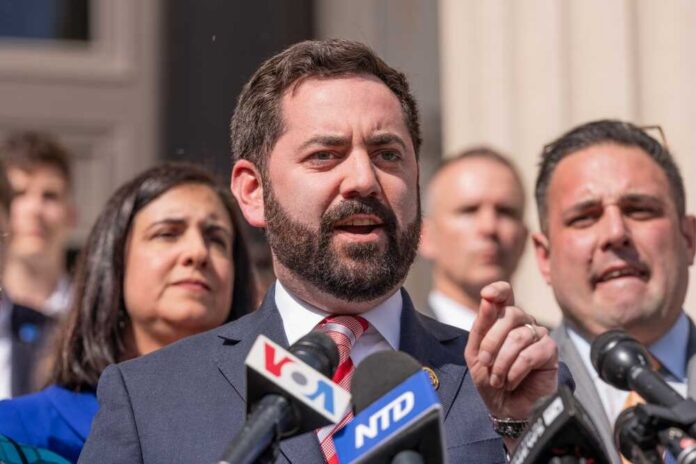
U.S. Energy Secretary Chris Wright, joined by Rep. Mike Lawler (R-NY), toured the Indian Point nuclear plant site in Westchester County on March 6 and argued New York should bring the facility back to service. Their pitch centered on basic grid math: rising demand needs steady, around-the-clock generation, and nuclear provides large-scale electricity without direct carbon emissions. The visit also drew protests from environmental activists and nearby residents.
Lawler’s public message was blunt: the facility “can be rebuilt” to generate power New York increasingly needs. The political tension is equally direct. A federal official and a Republican congressman are pushing a restart that would require state-level cooperation and federal regulatory action. For voters tired of energy scarcity and rising bills, the question is whether Albany will prioritize reliability—or continue chasing headline climate targets that fail in practice.
What the 2021 Closure Changed on the Ground
Indian Point’s closure in 2021 removed a major baseload generator that had supplied roughly a quarter of New York City and Westchester electricity. The shutdown followed years of anti-nuclear pressure and safety concerns, and it coincided with New York’s aggressive decarbonization messaging. But the post-closure reality was not a clean-energy utopia. Research cited in coverage indicates the region’s natural-gas share climbed from about 39% in 2017 to around 50% by 2023.
That shift matters because it helps explain why “net-zero” slogans can collide with physics and affordability. When dependable generation comes off the grid, replacement power often arrives from whatever can ramp quickly and run continuously—typically natural gas. Coverage also cited estimates that, had Indian Point been operating, it could have avoided about 8 million metric tons of CO2 in 2022. Those numbers underscore a practical conservative point: policy should be judged by measurable outcomes, not intentions.
The Cost, Timeline, and Red Tape Reality Check
Reopening a decommissioned nuclear plant is not a switch-flip. Holtec International, which owns the site and is conducting decommissioning work, has signaled that restarting is technically feasible but expensive—reported at roughly $10–$12 billion—and would take about five years. That estimate highlights the tradeoff lawmakers will have to confront: ratepayers and taxpayers are already stressed, yet the costs of unreliable power can also be brutal, especially when fuel prices spike.
Regulatory hurdles are just as consequential as engineering. Any restart would require state approval and action at the federal level, including Nuclear Regulatory Commission steps that are not yet in place. In other words, the political fight is not only about whether nuclear is “clean,” but about whether government at multiple levels can move quickly enough to solve a real-time energy crunch. Limited details have been provided publicly on specific licensing pathways or decommissioning milestones.
Albany’s Next Move: Study Commissions and Competing Alternatives
New York lawmakers have already begun shaping the debate through legislation. Senate Bill S1927A would establish a commission to examine the feasibility of reopening Indian Point and directs NYSERDA to study small modular reactors. That approach signals that, even among state officials, there is an acknowledgment that current plans may not reliably meet demand. At the same time, Gov. Kathy Hochul has explored alternatives such as importing hydroelectric power from Quebec.
'Dems Want Net-Zero… This Is It': Secretary Wright Urges Indian Point Nuclear Plant Restart https://t.co/c1dve7SDct
— zerohedge (@zerohedge) March 9, 2026
Politically, this is where the “net-zero” argument faces its stress test. Importing power can shift dependency away from in-state generation, while rebuilding Indian Point would emphasize domestic, high-density energy production. The research also notes Hochul later described the 2021 shutdown as “done in haste” in a letter referenced in coverage—an admission that fuels the case for revisiting decisions that were popular with activists but costly for families and small businesses.
Sources:
Energy Secretary Wright Calls to Reopen Indian Point Nuclear Plant
NY Senate Bill S1927 (Amendment A)
Lawler Announces Plan to Rebuild Indian Point