With prices still straining family budgets, new polls show voters want lower costs, not more speeches or ads about the economy.
Story Highlights
- Major polls show cost of living is the top worry for voters, eclipsing campaign messaging.
- Most families say groceries are unaffordable and their standard of living feels stuck or falling.
- About half of Americans fear they cannot afford food and gasoline, underscoring daily strain.
- Voters hear talk of lower inflation rates, but many still feel their money buys less.
Polling Confirms Affordability Is Crowding Out the Message War
Recent national surveys point to a simple truth that crosses party lines. Voters judge the economy at the checkout line. A Washington Examiner summary of polling found cost of living led voter concerns by a wide margin, and only a small share felt better off than two years earlier. Marketplace reported that nearly three in four voters said their cost of living was moving the wrong way, capturing the mood in plain language: “You can’t out-message their reality”. That reality is the real campaign.
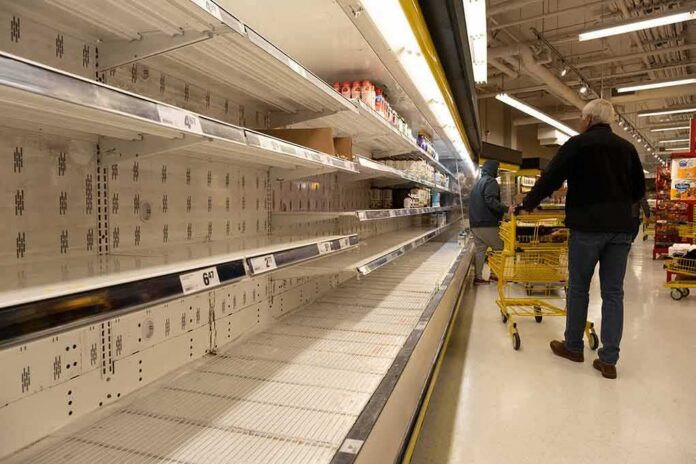
A Washington Post–Ipsos poll sharpened the picture. Most Americans said people like them had poor odds of improving their standard of living. Many called groceries unaffordable, reflecting strain on daily basics, not luxuries. These views cut across regions and incomes. Families feel the pinch at the store, the gas pump, and the rent desk. When wallets are tight, ads do not change minds. Lower bills do. The public is not asking for slogans. The public is asking for savings they can see.
Daily Costs, Not Talking Points, Drive Voter Judgment
An Associated Press–NORC survey found about half of adults were extremely or very worried about affording food and gasoline. That is not a niche problem. It is a kitchen-table crisis. Campaign reporters also note that high prices defined many races this year, with estimates that nearly half of families could not cover basic costs. These are facts voters live each week. They want action that stretches paychecks, not lectures about why prices rose or how fast they might slow someday.
President Trump and his team have highlighted slower inflation, which means prices are rising more slowly, not that they are falling outright. Reporters and fact-checkers have underscored that difference, even as the administration argues progress is real and building. Voters can accept both ideas at once. A cooling inflation rate is good. But if the grocery bill is still up and rent is still high, families do not feel relief. They judge leaders on the level of prices, not the rate of change.
The Communication Gap: Slower Inflation Versus Smaller Bills
Reuters reported that the President touted victory over inflation many times this year, while noting that prices remained elevated because a lower inflation rate slows increases rather than reversing past jumps. The New York Times described how many candidates tried to address affordability head-on, proving that both parties know prices rule the day. The lesson is clear. Numbers do not beat experience. The only message that sticks is a receipt that shrinks.
Marketplace summed up the hard boundary for spin: when voters feel poorer, words fail. The conservative takeaway is common sense. Washington must stop waste, secure energy, end rules that raise costs, and let American production work. Families need to keep more of what they earn. That means cutting the price drivers that come from bloated government, broken supply rules, and green mandates that punish the middle class. Relief must be measured in dollars saved, not ads aired.
What Works: Tangible Savings and Respect for Voters’ Reality
Polling shows frustration is broad, not partisan. Many do not believe their standard of living will improve soon, and many cannot afford basics with confidence. Leaders who respect that will focus on concrete steps that move totals on the receipt. That includes more affordable energy, fewer hidden fees and regulations that pad prices, and tax relief that shows up in take-home pay. When policy lowers costs people face every week, trust returns. When it does not, trust fades again.
🚨 THE GEORGIA SENATE SHOWDOWN: REP. MIKE COLLINS DROPS CLOSING GAS PRICE PREDICTION AS THE HEATED BATTLE WITH SEN. JON OSSOFF REACHES THE FINISHING STRETCH! 🚨
With just six days remaining until the November 3 midterm elections, the high-stakes Georgia U.S. Senate race between… pic.twitter.com/cRBm6z1Q2w
— Boardroom Patriot (@nwmsound) October 29, 2026
The bottom line for conservatives is straightforward. The best message is math that families can do in their heads. Did gas fall? Did groceries ease? Did the power bill drop? If yes, voters will hear it without a single ad. If not, no speech can fix it. Polls from across outlets all point to the same voter demand: shut down the noise and make our money go further. That is the path to both relief and results.
Sources:
twitchy.com, fox17.com, foxbusiness.com, ipsos.com, stateline.org, abcnews.com