U.S. Marines and sailors sank a cartel-linked floating refueling station near Ecuador, striking a major artery of Pacific drug smuggling.
Story Highlights
- SOUTHCOM says the vessel supported Los Choneros cartel logistics in the Eastern Pacific.
- Marines and sailors launched from USS San Antonio, boarded, cleared, and then sank the ship.
- The action fits a wider push to hit traffickers’ fuel and support networks, not just “go-fast” boats.
- Recent Treasury sanctions targeted Ecuador-based operators and vessels tied to cocaine routes.
What Happened Off Ecuador’s Coast
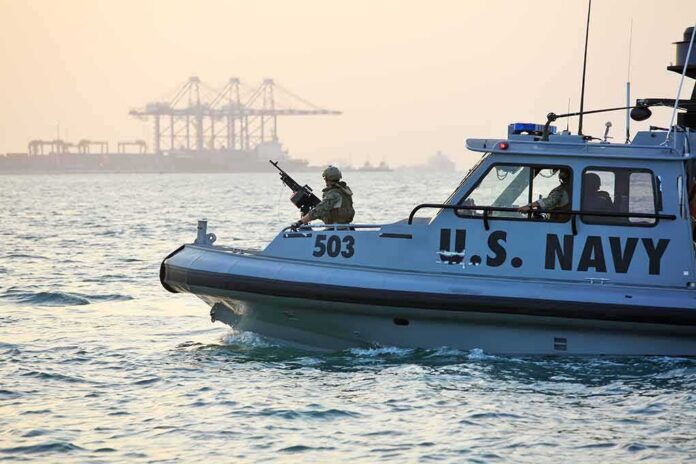
U.S. Southern Command said U.S. Marines and sailors launched from the amphibious ship USS San Antonio on August 28, 2026. They interdicted, boarded, searched, and cleared a vessel in international waters near Ecuador without incident. Command leaders described the target as a floating refueling station used to support at-sea drug trafficking runs. After the boarding, U.S. forces sank the vessel. Southern Command stated the mission was coordinated with the Government of Ecuador and ordered by its commander, General Francis Donovan.
U.S. Naval Institute News reported the interdiction as the latest hit on cartel maritime logistics. The outlet noted U.S. Marines and sailors from USS San Antonio executed the boarding and destruction at sea. The report highlighted that the platform functioned as a fuel node for traffickers, which lets smaller boats range farther and avoid detection by staying offshore for longer periods. Destroying the station removes a key support link for cocaine shipments moving north.
Why Floating Fuel Hubs Matter To Cartels
Traffickers use service vessels to stash fuel, food, and spare parts far from shore. That reduces risky port calls and extends the reach of smuggling boats. Analysts and recent sanctions actions show Ecuador-linked networks have built these logistics webs to keep cocaine moving through the Eastern Pacific. Taking down a refueling ship forces smugglers to shorten routes or take more risks near the coast, which raises their costs and exposure to patrols and sensors. That is the strategic point of these strikes.
The Department of the Treasury’s Office of Foreign Assets Control recently sanctioned fifteen Ecuador-based targets and identified ten vessels as blocked property for roles in a maritime cocaine network. Treasury said United States forces, including the Coast Guard, are surging cutters, aircraft, and teams to interdict and disrupt drug flows. Sanctions cut money and access, while at-sea actions deny fuel and mobility. Together they squeeze both the brains and the muscle of the smuggling business.
Ties To Los Choneros And Ecuador’s Security Fight
Southern Command linked the sunk vessel’s mission to Los Choneros, a violent Ecuadorian criminal group. Prior U.S. actions have targeted the gang and its facilitators for helping move cocaine north and providing logistics to larger cartels. Press and defense reporting said the latest interdiction continues a pattern of United States–Ecuador teamwork against maritime narcotrafficking. Joint operations in recent months focused on cutting key routes, seizing drugs, and denying offshore support to criminal networks that threaten both countries.
On Sept. 2, at the direction of #SOUTHCOM Commander Gen. Francis L. Donovan, and in coordination and collaboration with the Government of Ecuador, Joint Task Force Western Hemisphere (JTF-WHEM) successfully interdicted a vessel operating as a floating refueling station in support… pic.twitter.com/io55pvWff0
— U.S. Southern Command (@Southcom) September 2, 2026
For conservative readers, the takeaway is simple. When the United States hits cartels where it hurts—fuel, funds, and freedom of movement—American communities win. Floating gas stations on the high seas help criminals push poison toward our border and our towns. Under President Trump, United States forces are acting with partners to shut these hubs down. That action backs the rule of law, protects families, and shows resolve against transnational crime that exploits weak enforcement and open routes.
What Comes Next And Why It Matters At Home
Southern Command’s approach aims to stack pressure across the map. Sanctions freeze assets and expose shell companies. Boardings seize drugs and weapons. Sinking support vessels removes the “infrastructure” that keeps smuggling efficient. Each step raises risk for traffickers and lowers their profit. That matters at home because every broken route means fewer loads headed toward our border communities, fewer dollars feeding gangs, and fewer overdoses driven by cartel supply chains.
Task and Purpose reported this was at least the second such floating refueler destroyed in recent months, signaling a sustained campaign against offshore logistics. The outlet framed the action as part of direct U.S. military efforts to disrupt networks before they reach Central America and Mexico. That forward defense posture meets a core conservative aim: stop threats far from our shores while working with allies, enforce the law, and show American strength at sea where cartels try to hide in the gaps.
Sources:
realcleardefense.com, news.usni.org, foxsanantonio.com, taskandpurpose.com, facebook.com