As gas prices squeeze family budgets, President Trump is openly blasting ExxonMobil and Chevron for turning a wartime supply crunch into a multi‑billion‑dollar payday while drivers get no relief at the pump.
Story Snapshot
- President Trump says ExxonMobil and Chevron are “making too much money” off Iran war oil prices and must cut consumer fuel costs.
- Both companies posted huge second‑quarter profits, together earning about $26.5 billion as crude and refinery margins jumped.
- Trump demands the oil giants “give some of that back to the public” and lower retail gasoline prices for American drivers.
- The clash highlights a wider fight over who benefits when war, shortages, and globalism push energy prices higher.
Trump Confronts Big Oil Over Wartime Windfall
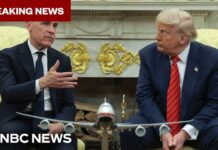
President Trump met reporters at the White House and did something many presidents avoid: he called out ExxonMobil and Chevron by name for cashing in on the Iran war while American families struggle with pump prices. He said the companies are “making too much money” based on a shortage and added, “I don’t like it.” Trump went further, saying they “ought to give some of that back to the public” and “better cut the retail price, the consumer price.”
Trump’s remarks mark a sharp break from the usual cozy relationship between Washington and Big Oil, and they land at a moment when many conservative households feel squeezed by years of inflation, global turmoil, and high energy costs. For a base that supports free markets but also expects fair dealing, his message is simple: wartime is not a license to gouge American drivers. He is putting public pressure on companies that often prefer to operate quietly behind the scenes.
Record Profits While Drivers Pay More
The anger is driven by numbers that are hard to ignore. In the second quarter, ExxonMobil and Chevron together earned roughly **$26.5 billion** in profit, the kind of haul usually seen only after major global shocks. ExxonMobil reported about $14.5 billion in profit, roughly double what it made in the same quarter a year earlier. Chevron booked around $12 billion, roughly four to five times its prior‑year results, fueled by higher crude prices and fatter refinery margins.
These profits did not appear out of thin air. Reports show U.S. crude prices averaged far higher during the quarter as the Iran conflict disrupted global capacity and shipping lanes, creating real supply risk. Refining divisions at both companies ran close to full tilt, earning billions by turning that expensive crude into fuel sold into a tight market. For ExxonMobil and Chevron shareholders, this was a bonanza; for drivers watching prices jump again, it felt like déjà vu from past crises, with war overseas and pain at home.
War, Markets, And The Fairness Fight
Energy reporters describe a familiar pattern: when conflict hits a major oil region, global supply drops, benchmark prices rise, and big integrated companies see profits spike much faster than wages or household budgets. The Iran war, launched earlier in the year, knocked out capacity and scrambled trade routes, which made every barrel coming from stable producers more valuable. ExxonMobil and Chevron pumped more oil, refined more fuel, and sold it into this stressed market, capturing the higher prices along the way.
From a strict market view, supporters of Big Oil argue this is simply how supply and demand work. Prices move up when supply falls and demand stays strong, and companies that invested in production reap the gains. But Trump’s criticism taps into another question many conservatives ask: at what point does “market pricing” become exploiting a crisis? When profits jump several hundred percent while middle‑class families cut back on summer trips and groceries, calls to “give some of that back to the public” resonate far beyond partisan lines.
What Trump Wants Big Oil To Do
Trump is not just venting; he is pushing for specific action. He says ExxonMobil and Chevron should lower gasoline prices at their branded stations and pass more of their wartime gains back to customers. He frames this as basic fairness: if a company makes several times last year’s profits because war tightened supply, families filling up should not bear the full cost while executives and investors celebrate. His demand echoes long‑standing conservative concern about powerful corporations hiding behind complex markets to avoid accountability.
U.S. President Donald Trump has criticised major oil companies for earning what he described as excessive profits from elevated energy prices. He urged producers, including ExxonMobil and Chevron, to reduce fuel prices for consumers as gasoline costs remain under pressure.… pic.twitter.com/VGhvs55I1u
— Global In Depth (@Globalindepth) August 4, 2026
Critics note that the pricing chain from crude to the corner gas station involves many steps, including taxes, transport, and local competition, and no single company controls every pump. Still, ExxonMobil and Chevron do influence wholesale and branded retail prices, and their decisions about margins directly affect what drivers pay. By speaking plainly about “too much money,” Trump is signaling that conservative, pro‑energy policy does not mean turning a blind eye when war, shortages, and corporate choices combine to hammer American families.
Sources:
cnbc.com, usatoday.com, france24.com, commondreams.org, newsbreak.com, aol.com, nypost.com, theguardian.com