
After decades of delays and billions in taxpayer dollars, NASA’s Artemis II mission—aimed at returning American astronauts to lunar orbit for the first time since 1972—has been pushed back yet again, now targeting an April 2026 launch as engineers scramble to fix critical technical failures that should have been resolved years ago.
Story Highlights
- Artemis II launch delayed to April 1, 2026 at earliest after helium flow and hydrogen leak issues forced rocket rollback from Launch Pad 39B
- Four-astronaut crew will attempt first crewed mission beyond low Earth orbit in over 50 years on a 10-day lunar flyby
- SLS rocket program costs approximately $4 billion per launch, straining budgets while technical setbacks mount
- Mission aims to validate hardware for future Artemis III lunar landing planned for 2027, keeping America ahead of Chinese and Russian competitors
Technical Failures Force Another Postponement
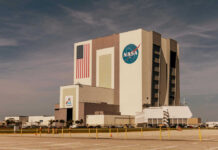
NASA rolled the Space Launch System rocket to Kennedy Space Center’s Launch Pad 39B on January 17, 2026, but critical technical problems emerged during wet dress rehearsals throughout February. The first rehearsal on February 2 revealed issues that scrubbed the planned February 8 launch. A second rehearsal fixed a hydrogen leak but uncovered a helium flow problem to the upper stage, forcing engineers to roll the massive rocket back to the Vehicle Assembly Building on February 25. These setbacks scrubbed all March launch windows, including targeted dates of March 6-9 and March 11.
Historic Mission Carries Heavy Price Tag
The Artemis II mission represents the first crewed flight of the SLS rocket and Orion spacecraft, carrying Commander Reid Wiseman, Pilot Victor Glover, Mission Specialist Christina Koch, and Canadian Space Agency Mission Specialist Jeremy Hansen. The crew will embark on a 10-day lunar free-return trajectory, flying within approximately 8,000 kilometers of the Moon’s surface before splashing down in the Pacific Ocean. This marks America’s return to deep space crewed missions since Apollo 17 in 1972, a gap of over five decades that raises questions about government efficiency and program management.
Taxpayer Costs Mount Amid Repeated Delays
At roughly $4 billion per launch, the SLS program continues consuming massive amounts of taxpayer money while struggling to meet deadlines. The rocket system originated from the canceled Constellation program in 2010, revived through the 2010 NASA Authorization Act, and has faced chronic delays despite billions in funding. While NASA touts job creation at Kennedy Space Center and inspiration for STEM education, fiscal conservatives question whether these costs justify results, especially when private companies like SpaceX develop launch systems at fraction of government expenses. The mission’s success remains critical for validating hardware needed for Artemis III’s planned 2027 lunar landing.
Geopolitical Stakes Drive Space Race Forward
Beyond technical achievements, Artemis II carries significant geopolitical weight as China and Russia accelerate their own lunar ambitions. The mission aims to reinforce American space leadership established during the Apollo era but lost during decades of reduced focus on deep space exploration. NASA’s Artemis program, established following the 2017 Space Policy Directive-1, prioritizes crewed lunar missions as stepping stones toward eventual Mars exploration. The successful uncrewed Artemis I flight in November 2022 validated basic hardware, but Artemis II’s crewed test represents the real proving ground for systems designed to sustain human life beyond Earth orbit.
April Launch Window Remains Uncertain
As of March 12, 2026, NASA published updated launch availability showing potential windows on April 1, 2-6, and 30, though officials caution these dates remain “subject to adjustments” pending resolution of the helium flow issue. The rocket sits in the Vehicle Assembly Building undergoing final integration and testing before engineers can roll it back to the pad. NASA emphasizes safety over schedule, noting the mission tests critical systems including life support, radiation protection, and deep space navigation that must function flawlessly to protect the four-person crew. This cautious approach, while prudent for astronaut safety, reflects broader concerns about government programs prioritizing process over results, a pattern that frustrates taxpayers demanding accountability for massive expenditures.
Sources:
When will Artemis II launch? – Sky at Night Magazine
Artemis II: What to Expect – The Planetary Society
Artemis II Mission Availability – NASA
Artemis II Launch Details – Next Spaceflight
NASA Adds Mission to Artemis Lunar Program Updates Architecture
Launch Your Name Around Moon in 2026 on NASA’s Artemis II Mission