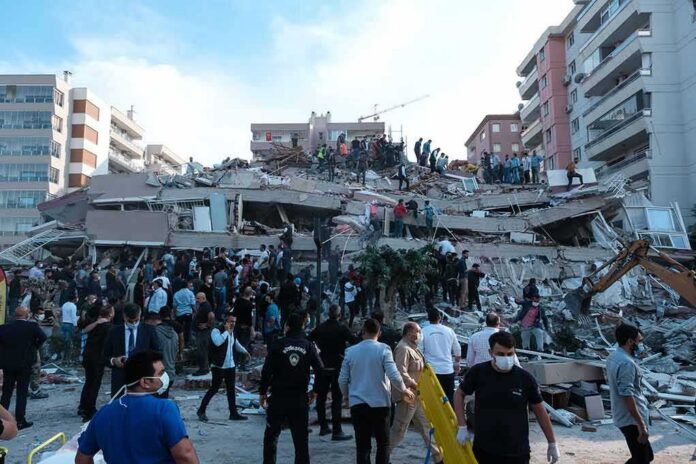
At least nine people were killed in Israeli airstrikes on a southern Lebanon village, with reports saying women and children were among the dead.
Story Highlights
- Lebanon’s Health Ministry reported at least nine dead after two early-morning strikes.
- Reuters and Associated Press describe some victims as women and children in recent, similar strikes.
- Israel has increased strikes in the south after Hezbollah drone and rocket activity.
- United Nations updates warn of damage to homes, roads, and civilian sites across southern Lebanon.
What Happened: Two Strikes, One Village, Heavy Toll
Lebanon’s Health Ministry said two airstrikes hit a southern village before dawn, killing at least nine people and wounding others, including women and children. Local reporting in recent weeks shows a rising death toll from Israeli strikes across Ansar, Kfarhata, and other towns, with some attacks hitting homes and residential blocks. Officials in Beirut have tracked one of the deadliest periods since June, when fighting had briefly eased but then resumed with force in August and early September.
Reuters and the Associated Press reported multiple deadly incidents in the same region, including strikes that killed seven people in Ansar and at least eleven people in separate attacks, with children among the victims in some cases. These reports present a consistent picture of night or early-morning strikes, rescue efforts that last for hours, and hospitals treating many blast injuries. The accounts also match patterns of harm seen in southern Lebanon during earlier rounds of fighting, where homes and narrow streets increase risk to families nearby.
Israel’s Stated Rationale: Targeting Hezbollah After Drone Launches
Israeli officials said recent operations in southern Lebanon respond to Hezbollah’s use of drones and other weapons against Israeli troops and areas near the border. Israel has framed its strikes as precision hits on militant sites, launch teams, and command nodes. Military statements argue that Hezbollah embeds near homes and shops to shield assets. That claim underscores the tight urban terrain across the south, where small buildings and mixed-use blocks sit close to known routes and suspected staging points.
Cross-border fire has fluctuated since earlier ceasefire efforts, but the pace of attacks rose again in late summer. Reports of drone launches and follow-on airstrikes pushed the risk higher for civilians who live and work near contested zones. This cycle often moves fast: a drone launch, radar tracking, and then a strike on suspected cells or buildings. When strikes land near apartments, the blast can bring down entire floors, trap families, and overwhelm local civil defense teams during the night.
Civilian Impact: Damage to Homes, Roads, and Daily Life
United Nations updates describe heavy damage to homes, roads, and local services in southern Lebanon, as repeated strikes hit areas near towns and villages. Aid groups and local authorities say rescue crews face blocked routes, power cuts, and debris that slows searches for survivors. When strikes repeat across several districts, clinics run low on supplies and staff must triage serious head wounds, burns, and shrapnel injuries. Families flee after nearby hits, leaving behind jobs and schools to seek safer ground.
⚡️🚨 Digest — 09:51–12:50 UTC
LEAD: Israeli forces sharply escalated strikes across south Lebanon — Mansouri bombed 16+ times, Nabatieh al-Fawqa and Kafr Tibnit hit repeatedly, a drone strike hit a car in Nabatieh's Al-Maslakh causing injury, and Lebanon's Health Ministry…
— Middle East Observer (@ME_Observer_) September 7, 2026
Lebanon’s health authorities and international monitors have tracked the rising toll over months of fighting, reporting spikes after major waves of aerial strikes. Reuters reporting from June and August logged some of the worst days since earlier truces, including attacks that killed more than ten people at a time. These figures align with a broader pattern in which border flare-ups lead to sudden surges in civilian harm. Each new blast compounds the strain on local communities already living on edge.
Why It Matters to Americans: Stability, Security, and Clear Red Lines
American readers want peace and stability abroad so our troops stay out of new wars and our energy prices stay stable at home. Hezbollah sits on Israel’s border and receives backing from Iran, a regime that targets U.S. partners and threatens American interests. When drone launches trigger cross-border strikes, civilians pay the price, and the risk of a wider regional fight grows. Clear deterrence, strong diplomacy, and strict limits on militias help protect families on both sides.
President Trump’s team faces a tough balance: support Israel’s right to stop attacks, press to reduce civilian harm, and keep pressure on Iran’s network. The goal is simple common sense. Stop drone and rocket fire on Israel. Stop strikes that hit homes. Keep the fight away from families and schools. That approach defends our ally, eases human suffering, and prevents a spiral that could drag Americans into another costly conflict. It is a test of resolve and restraint at the same time.
Bottom Line: Stop the Rockets, Protect Civilians, Avoid a Wider War
Today’s reporting shows at least nine dead in one village and more casualties across the south in recent weeks. Israel says it is hitting Hezbollah after drone attacks, but strikes in dense towns risk killing families and fueling more rage. Washington should back Israel’s defense while pushing for tactics that spare homes, and press Iran-linked groups to stand down. Fewer rockets and fewer airstrikes will save lives and lower the chance of a broader war.
Sources:
youtube.com, reuters.com, aljazeera.com, wral.com