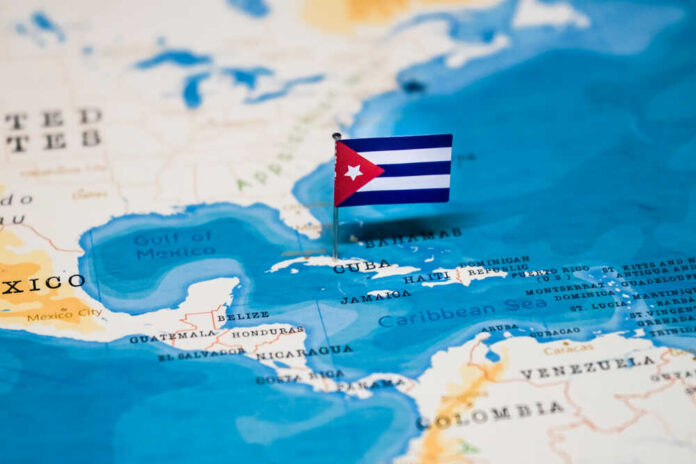
Russia is daring the United States to blink in our own hemisphere—by pushing an oil tanker toward Cuba under naval escort while America is stretched by the Iran war and rising energy costs at home.
Story Snapshot
- A Russian-flagged tanker, the Anatoly Kolodkin, is nearing Cuba with about 730,000 barrels of crude after being escorted by a Russian warship through the English Channel.
- U.S. Treasury has reaffirmed the Cuba oil embargo even as the administration has eased some other Russia-related oil restrictions amid Iran-war-driven market volatility.
- A second vessel, the Sea Horse, is suspected of using AIS “spoofing” tactics to covertly deliver Russian diesel to Cuba earlier this month.
- Analysts quoted in the reporting frame the move as geopolitical brinkmanship—testing Trump’s resolve and signaling leverage tied to Russia’s wider negotiations, not humanitarian aid.
Russia’s tanker run puts Trump’s “Monroe Doctrine” moment on the clock
U.S. tracking and allied naval monitoring have focused on the Russian-flagged Anatoly Kolodkin, a tanker carrying roughly 730,000 barrels of crude and expected to reach Cuba within days, according to the reporting. Royal Navy monitoring picked up that the ship moved through the English Channel with a Russian warship escort, an unusually overt posture for an oil shipment. The visible escort is part of why experts describe the voyage as a deliberate political test, not routine commerce.
President Trump has signaled action on Cuba is coming “very soon,” and reporting describes U.S. agencies preparing for enforcement while Treasury reiterates the embargo’s central point: Cuban oil deliveries are a red line. The unresolved question is how far enforcement goes at sea—especially when the administration is also managing a hot conflict with Iran and voters increasingly skeptical of new foreign entanglements that push fuel prices higher and distract from domestic priorities.
How the “Sea Horse” allegedly worked around sanctions enforcement
The second case shaping Washington’s threat assessment is the Hong Kong-flagged Sea Horse, which carried about 200,000 barrels of Russian diesel. Vessel-tracking analysis cited in the reporting indicates the ship likely delivered fuel to Cuba in early March, then diverted toward Venezuela. The key detail is the alleged use of AIS manipulation—“spoofing”—a tactic where the ship’s broadcast location or destination is falsified to complicate enforcement and make interdiction riskier.
Reporting ties the suspected delivery to Cuba’s worsening energy emergency, including major blackouts and a March 16 grid collapse that impacted the island’s population. That context matters because it shows why fuel shipments are strategically potent even when they do not “solve” Cuba’s shortage. A limited delivery can still keep critical nodes running and—more importantly for Moscow—create a decision point for the U.S.: either enforce the embargo aggressively and accept escalation risk, or tolerate leakage that weakens pressure.
Embargo enforcement collides with Iran-war market pressure and voter fatigue
One of the more complicated policy signals in the reporting is Treasury’s reaffirmation of the Cuba oil embargo alongside moves to ease other Russian oil sanctions to help stabilize prices. With the U.S. already dealing with global oil volatility tied to the Iran war, the administration’s balancing act becomes clearer: choke off strategic adversaries and hostile regimes while avoiding price spikes that punish American families. For many conservatives, that tradeoff is no longer theoretical—it hits the gas pump.
This is where the politics inside the Trump coalition get tense. MAGA voters who backed “no new wars” have watched the Iran conflict expand U.S. commitments, and energy shocks reinforce the sense that Washington never learns the lessons of regime-change adventures. At the same time, the Cuba embargo is framed by the administration as a direct challenge to a communist regime, and the Russia convoy reads like a probe into whether America can still enforce hard lines close to home while juggling overseas conflict.
What happens next at sea—and what Washington should demand before escalating
The reporting leaves a central uncertainty unresolved: no interdiction has been confirmed, and arrival estimates have shifted—earlier projections suggested early April, while more recent tracking suggests the tanker could arrive within days. Kremlin messaging has been calibrated, offering “assistance” to Cuba while avoiding detailed confirmation. That ambiguity is a feature, not a bug: it forces U.S. planners to weigh a spectrum of responses, from monitoring to boarding to seizure, each carrying different escalation risks.
For constitutional-minded Americans, the key is insisting on clarity and lawful limits if the administration escalates. Maritime enforcement can be legitimate when grounded in statute and transparent rules of engagement, but history shows how fast foreign crises become pretexts for open-ended executive action, domestic surveillance, and blank-check spending. With the Iran war already straining trust, the White House will need to show the public a coherent objective in Cuba—defined end states, costs, and legal authority—before any confrontation becomes another “forever” commitment.
Sources:
The Russian oil tanker playing chicken with Trump over Cuba
Russia plays chicken with Trump
Russia ships fuel to Cuba using spoofing tactic, challenging Trump embargo: reports